Welcome to the

South France Villas Blog

Showing posts with label bullfighting. Show all posts

Tuesday, 3 July 2012

The Famous 5 Day Feria in Beziers & Much Much More

Once the Languedocien stronghold of Catharism, the modern day Beziers offers you festivals, history, the Canal du Midi and Mediterranean beaches just 6kms from the town, what more could you want!  
south france villa rental
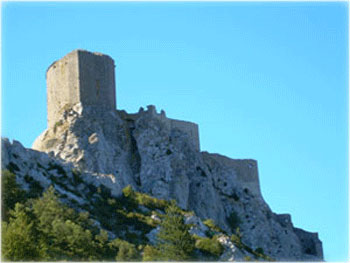
Peyrepertuse Cathar Castle


(Our property La Garenne ( HE029A) is ideally placed to explore all of this and more).


The Cathedal in the centre of Beziers - Sainte-Nazaire rises above the cobbled streets the panoramic view over the Orb River is stunning and the town boasts boutiques galore and a plethora of restaurants including the L’Ambassade, which recently got a good review in the local Anglo/French Magazine – the Herault Times.

south france villa rental
Cathedral at Beziers
This region is also a prolific wine producing area offering a vast array of wonderful wines for you to enjoy - Check out: www.languedoc-wines.com 

south france villa accommodation


People come from far afield for the famous 5 day Feria of Beziers held around 15th August every year – bull fighting may not be to everyone’s taste, but the spectacle is amazing and the street party atmosphere with open air bodegas and live music is enthralling and definitely worth a visit - www.ville-beziers.fr

south france vilas rental
Beziers Feria


Tuesday, 19 June 2012

MARSEILLAN

The Rive Gauche in Marseillan - www.marseillan.com is a lovely spot to while away those long holiday lunches, sit on the port and enjoy tapas or oysters in the array of restaurants lining the port.  Noilly Prat is opposite so why not take the tour – it is fascinating!


If you are staying at at one of South France Villas properties in the Herault, Languedoc Roussillon, such as HE011A Villa Ramistan, the village and port of Marseillan are just a stone’s throw away.

Tuesday, 31 May 2011

The Appeal of the Camargue - Wildlife, the Knight's Templar & the Wild West


At first the Camargue doesn't sound so appealing. Originally a marshy wasteland, good for nothing except the extraction of salt - it is now a productive agricultural region, hosting an abundance of amazing wildlife and attracting one million travellers each year.

 Ever since the Knights Templar established themselves here, a subtle human influence upon this unruly land has allowed it to blossom into one of the loveliest natural settings in France. Yet despite the years of taming by the human hand, there is still the feeling that things are wild and uncontrolled here. From the mysterious shifting colours of some of its signature wildlife* to ancient legends and relics, the Camargue captivates those who venture here


This French version of the Wild West is relatively young, despite that the cowboys and bullfighting seem to be such a concrete part of the local culture. Less than one hundred years ago, the region re-invented itself. Farmers transformed themselves into Camargue cowboys, reviving the local economy and creating a new cultural lifestyle for the region. 

 The bulls themselves have roamed the area since the time of the Romans but have become especially popular since bullfighting was cultivated in the region. Those who wish to turn their passion for the bulls into a profession can study the art of bullfighting in the region. Arles is home to a bullfighting school where about thirty young students learn the basics of bullfighting each year.


One of the main attractions on the area is the protected wetland and marine area, called the 'Parc naturel régional de Carmague' (the Regional Nature Park of the Camargue). 

 More than 400 species of birds make this area their home, including flamingos. About 10,000 flamingo pairs live in the lagoons of the delta. There is a pink pigment in the plankton which they eat - it is this delicious snack which gives the birds their striking pink colour.


Most of the park is closed to traffic, so the best ways to get around are by bicycles or horseback tours. We particularly recommend the horseback option - because you won't be riding just any horse! The Camargue is home to the Camargue horse - they are a species unique to the area and the the only known descendents of prehistoric horses that roamed Europe during the Palaeolithic period. Horses are available for the day from stables along highway D570 between Arles to les Saintes-Maries-de-la-Mer.

Speaking of Les Saintes-Maries-de-la-Mer - we definitely recommend that you pay this town a visit during your stay in the area. It's like Mediterranean seaside resorts were 70 years ago; quiet and gentle with unspoilt and uncrowded beaches. It will be interesting particularly those interested in History or Christianity. 

 According to legend, this is the cradle of Christianity in Western Europe. It is said that three Marys - Mary Magdalene, Mary Jacobé, Mary Salomé - and Sarah, their servant, sailed to this town after the crucifixion of Jesus and settled here, bringing the story of Jesus with them.

 Relics of the Saints can be found in the church. The town has become a major destination for pilgrims and each year there is a big festival in celebration and memory of the women. 

 For those who are of a secular inclination, it is still a charming town to visit. In the early twentieth century it became a literary and artistic centre, with visits from creative people such as the writer Ernest Hemingway and the painter Picasso. The film industry took advantage of its natural beauty, using it as the setting for various films.


Les Saintes-Maries-de-la-Mer -- Van Gogh

The best times to visit are in Autumn and Spring, as you will avoid the worst of the tourists and mosquitoes. Autumn is an especially good time because the bird population swells as birds fly south to Africa for the impending winter.

You can experience the region's beautiful scenery via film - these movies were both set in The Camargue:
'Crin Blanc' ('White Mane') - a 1953 children's film which won the Cannes Film Festival's Grand Prize
'Friends' - Filmed in 1971, with a soundtrack featuring Elton John

* Shifting Colours? Some of the wildlife here changes colour! The Flamingoes lose their pink hue and fade to white if they don't eat enough plankton and the famous White Camargue horses are brown or black when born, gradually becoming white after a few years.

Where to stay?

We have several fantastic luxury holiday villas nearby. Please visit our website and browse our holiday villas in Provence. If you would like any assistance in choosing a charming villa for your holiday, please don't hesitate to contact us!

Contributions by Katarina Byrne

Tuesday, 29 June 2010

History and Art in Arles - Van Gogh, International Photography Festival & Roman Architecture


Arles is a great destination for art-lovers. Vincent Van Gogh was famously a resident in Arles. He may have only spent about a year in the town, but it had a profound effect on him. 

 During his time here, he produced over 300 paintings and drawings - and it was here that he established the distinct post-impressionist style for which he is known. What was it about Arles that attracted Van Gogh? He loved the local landscape and the people who lived there and the vibrant colours produced by the bright Provencal sunlight.

You can visit many sites around Arles which actually inspired Van Gogh. There are 10 easels placed at the same vantage point of his original works. You can get a map at the Tourist Information office showing you where each easel is located -- or you could turn it into a bit of a scavenger hunt and try to find all 12 on your own!


You can also visit the Cafe which he frequented. It may be slightly over-priced, but it's worth it to grab a coffee and bask in the atmosphere which drew Van Gogh to the establishment.


There's more to Art in Arles than the legacy of Van Gogh, however! 

The city is also famous for a fantastic international Photography Festival which has run every summer since 1971. The Festival is opening this weekend (Saturday, July 3rd, 2010) and running until mid-September. You can find out more at this website (available in English - click the British Flag at the top of the main page). There are also several museums which are worth a visit. The Arles Folk Museum is particularly interesting, providing an insight into the tradiitons and culture of the region.

As well as being a cultural centre, Arles is also an important historical city. The Roman architecture is beautiful and many of them have now been World Heritage Listed. In many cases these remains have been well preserved. In fact, even after 2,000 years, the amphitheatre is still in use today! During the summer months it hosts bullfights, and it is open for tours all year. The bullfights are definitely a must-see. They often have Provençal-style bullfights at the arena -- those who are uneasy at the idea of a bullfight might prefer this style. In the Provençal-style, the bull isn't killed. Rather, a team of athletic men attempt to remove a tassle from the bull's horn without getting injured.


A nice day trip from Arles would be to visit the Camargue. You can read more about this enchanting region in one of our earlier blog posts.

For a range of beautiful, charming and luxurious villas near to Arles and elsewhere in the south of France visit our website www.southfrancevillas.com

Monday, 14 June 2010

NIMES - The Old and the New

Home to the greatest wealth of ancient buildings in France, travellers have long flocked to this historic city. Nimes was established as a Roman colony around 28 BC and became one of the most important towns in France, positioned on the route between Italy and Spain. Its prosperity during this period can be witnessed by the many remains of many Roman buildings which can still be visited today. One of the most impressive of the Roman buildings is the elliptical Roman amphitheatre, which looks just like the one in Rome. It was built sometime around the 1st century AD and it is the most well-preserved Roman arena in the country. Back in the days of the Romans, the amphitheatre seated 20,000 blood-thirsty spectators for gladiatorial combats. It is still in use today as an arena for bull fighting and concerts. The UNESCO World Heritage listed 'Pont du Gard' is also a highlight. The bridge has three levels with an aqueduct on the top level. Incredibly, the precise construction of the bridge eliminated the need for the use of mortar at all. The stones were cut to fit together perfectly, despite the fact that some of them weighed up to 6 tons! And you can't miss the Maison Carrée (AKA 'Square House'), which is the best-preserved Roman temple anywhere in the world.


Yet it's not all ruins and Romans. Whilst preserving its historic splendour, Nimes has become a vibrant and modern city. Friendly competition between nearby Montpellier has sparked a wealth of innovation in Nimes. It hopes to be recognised the most dynamic and energetic city in the Languedoc. By enlisting architects such as Jean Nouvel and Philippe Starck, Nimes is well on its way to overtaking Montpellier!

If you get an overdose of visiting the monuments and ruins, wandering the streets of the old town in a pleasant pursuit in itself. Stop and have a leisurely coffee at one of the many cafes during your explorations. With 300 days of sunshine, take a seat outside the cafe to bask in the warm sun and people-watch as the pedestrians pass by. The Jardins de la Fontaine ('Gardens of the Fountain') is lovely, too. It is built around the Roman thermal ruins and features fountains, trees, grottoes and a lovely view from the Roman tower. Nimes also has many museums, which you could peruse in the unlikely event of rain!


Apart from the Roman ruins, Nimes also has another large claim to fame - it is the home of Denim! Get it - Denim... De Nimes? The fabric was originally named 'Serge de Nimes', and at some point the 'Serge' was dropped and the name became Anglicised into today's word, 'Denim'. During the 1849 Californian gold rush, Levi Strauss was engaged in the profitable business of manufacturing trousers for miners. In search of a sturdy fabric which would withstand the tough conditions in the mines, he stumbled upon 'Serge de Nimes'. He began to import it and it became incredibly popular - as I'm sure you're aware of!


Villas

Looking for a nice place to stay near to Nimes? Consider a beautiful villa for your holiday in Southern France!


GR009A Mas Sevenne
Sleeps 8-10
A very spacious hill top village house in the foothills of the Cevennes, near St Hippolyte du Fort, in the Gard. Large private garden with swimming pool. A blend of old stone and contemporary. All rooms and terraces have stunning views.
GR008A Villa Nadege


GR008A Villa Nadege
Sleeps 12.

Villa Nadege is an exceptional and quite luxurious country house which has been finished and decorated to an extremely high standard with a large attractive garden, a huge summer kitchen, and a private heated pool measuring 12mx6m.


It is situated on a hill in a picturesque Mediterranean village, in an area of great natural beauty with great views; an intimate landscape of small hills with limestone scarps and 
hardy Garrigue woodland.

GR010A Domaine Fontaine du Mas

GR010A Domaine Fontaine du Mas
A huge stone-built farm in the Cevennes foothills close to Uzes, sleeping up to 30. Private park with tennis court and pool. This large villa in the Languedoc is ideal for large groups as well as weddings, seminars, family reunions and celebrations.

For more of out properties check out our website www.southfrancevillas.com.

Contributions by Katarina Byrne

Friday, 22 January 2010

Welcome to the new South France Villas Blog!

Southern France is one of the most beautiful regions in the world. But I'm sure we don't need to tell you that! From television footage of the Cannes Film Festival on the News, to photographs of lavender fields, to the paintings of Van Gogh and Cezanne: even if you have yet to visit, chances are you've already glimpsed some of the beauties that are to be found here. Yet in order to really experience the South of France, there is no substitute for spending some time living here. Even if the commitment of moving permanently to another country is out of the question: you can still absorb much of what is on offer by taking up residence even for a short amount of time. The perfect way to do this is to rent your own South France Villa - more authentic than a room in a high-rise hotel, it enables you to live in a truly French manner, if only for a week or a month.


To kick off our new blog, we'd like to begin with one of our favourite cities in the South of France: Béziers.

Béziers is often neglected in the standard tourist itinerary, which is both an enourmous oversight but also a blessing -- compared to some other more famous cities in Southern France, Béziers remains much more authentic. If you are thirsting for a taste of the real Languedoc, then you may well have just found the place to satisfy your thirst. Indeed, if thirst is in fact something of a concern for you, then you're in luck - Béziers and the surrounding region is host to some of the best wines that can be found in France.


Wine
Béziers is often called Southern France's Capital of Wine. Now that's quite a claim - but Béziers has had such a long tradition of wine-making that it's no wonder that the wine has become so highly respected. The region began its romance with wine when it was a thriving Roman colony. The Romans exported white wine and olives from Béziers back to Rome. It was during the 19th century, however, that Béziers really began to make its name as a wine-making region. Better transport meant that the winemakers could begin to export their wine far and wide, and Béziers became something of a boom-town. The overproduction which caused the Winemaker's revolt around the turn of the 20th century briefly halted the progress of the wine industry in Béziers, however now the region is back with a vengence - its wine is better than it's ever been. The wine in Béziers is, quite logically, designed to match the local diet. Being so close to the sea, the cuisine is largely based on seafood, which is reflected by many of the wines produced here.


Bullfighting
Yet wine isn't the only big drawcard in Béziers - it is also host to arguably the best festival in Languedoc. Every year in August, Béziers' 'Feria' attracts over a million visitors. It features five days of fireworks, music, street entertainment, a soccer match, wine fair and parties. The main attraction of the Feria, however, is the bullfighting. The Iberian-influenced bullfights which you can find in Béziers are full of spectacle and flair. They are rich in tradition and ceremony, and include lots of showy choreography.

History
As one of the oldest cities in Europe, Béziers has a rich history. Even before the Romans arrived, Béziers was a Phoenican settlement. Its Roman heritage can still be seen today, in the ruins of a Roman amphitheatre. Béziers also had an important role during the crusades as a stronghold of Catharism. Perched at the top of a hill in the medieval quarter of the town, you can find a magnificent Gothic Cathedral, which was rebuilt after being destroyed during the crusades. The Canal du Midi is also an important site in Béziers. It is a UNESCO world heritage listed site, and contains many intricate locks, bridges, dams and tunnels. Also of interest is Béziers’ Old Bridge (Pont Vieux) built across the river Orb in the 12th century.

What else?
Yet Béziers still has so much more to offer. It is close to the beach where you can soak up the sun on the sand, or engage in many water activities such as jet skiing, windsurfing and sailing. Cycling, horse-riding, hiking and golfing are also popular leisure activities. For the more adventurous, there is caving, bungee jumping, 'acrobranching' (treetop adventure course), mountain biking and quad biking. It is also the perfect base from which to explore the wild, rugged Languedoc region.


Other Interesting Facts:
- Béziers now has 107,800 hectares of vineyards, making it the biggest wine producing area in the world.
- "Labyrinth", a novel by Kate Mosse, draws on the history of Béziers.
- On average, the Languedoc region has 300 days of sunshine a year.


To Rent a Villa in the South of France, please visit our website and browse through the many top quality villas which we offer.


Contributions by Katarina Byrne