


Corsica has been occupied by the Greeks, the Romans, the Vandals, the Visigoths, the Saracens, the Lombards and the Genoese. For a brief period it managed to declare itself an independent republic, and it created a constitution for itself (written in Italian). And since 1764, Corsica has (mostly) been a region of France, after the French purchased it from the Republic of Genoa.
Corsicans, however, are quite resilient - they have managed to maintain a local identity throughout all the upheavals. Despite that pretty much everyone knows French, which is the language of commerce and media, the majority of the population speak a language native to Corsica. The island also has some autonomy from the French government and is exempt from paying certain national taxes. So a trip to Corsica is an interesting experience - you’re still technically in France, but it is a very different holiday from a sejourn on the mainland. If you’ve already been the Southern France, then a holiday house in Corsica could be the perfect place for your next French holiday!
Corsicans, however, are quite resilient - they have managed to maintain a local identity throughout all the upheavals. Despite that pretty much everyone knows French, which is the language of commerce and media, the majority of the population speak a language native to Corsica. The island also has some autonomy from the French government and is exempt from paying certain national taxes. So a trip to Corsica is an interesting experience - you’re still technically in France, but it is a very different holiday from a sejourn on the mainland. If you’ve already been the Southern France, then a holiday house in Corsica could be the perfect place for your next French holiday!
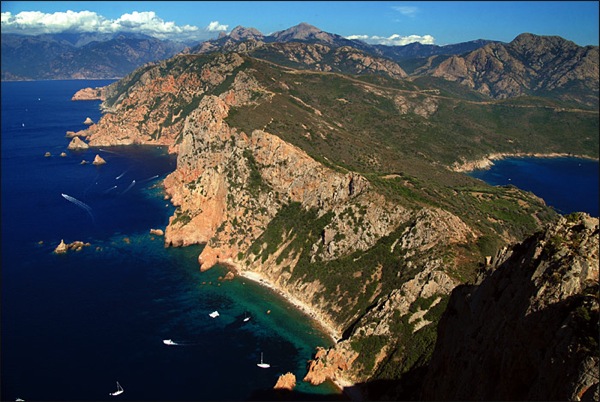
One thing which Corsica can laud over other parts of the Mediterranean is that it is relatively unspoilt, having had less development. Nature lovers (and also those who prefer to admire the scenery from afar!) will fall in love with the magnificent mountains, abundant wildlife and the one thousand metres of coastline.
What to do?
The most popular activities in Corsica are centred around the beaches - such as swimming, snorkeling, wind-surfing and scuba diving. Not to mention basking in the sun on the sand! However there’s more to Corsica than just intoxicating yourself with the sun and surf -- there are also some fantastic walks on the island. There are some stunning routes - both on the coast and in the mountains. There is something for everyone, from easy strolls through beautiful scenery to much more intense and challenging hikes. (The ‘GR20’, which winds its way from the southern part of the island, up to its north-western corner, takes most people about 2 weeks to complete!) Corsica values the land and environment and has set up National Parks to protect its natural treasures. The Natural Regional Park of Corsica was primarily created for the protection of rare animal habitats, but it also just plain stunning. The Scandola Nature Reserve is incredibly beautiful, and it is a bit of an adventure to get there, as the only route into the reserve is by boat -- the effort is generously rewarded by the sights which greet you.

The Island is also popular with those with a penchant for History, as Corsica was the birthplace of Napoleon. Napoleon's birthplace in Ajaccio, a large and simple residence, is now a museum devoted to the Bonaparte family in Corsica. The museum evokes the life on Corsica in the 18th century, and introduces the Bonaparte family through a number of exhibits through the rooms of the house. Corsica’s history is much richer than Napoleon, however. You can also visit the ruined battlements of Castello, and learn of medieval adultery, family feuds, revenge killings, betrayal and treachery. There are also a number of interesting museums, displaying artifacts and traditional Corsican tools, clothes and other items. The oldest human skeleton ever found on Corsica (called the ‘Dame de Bonifacio) is on display in a museum near Bonifacio - the skeleton is thought to be an ancient 8,500 years old!
When to visit?
Corsica is typically Mediterranean with its hot, dry summers and mild winters. Up in the mountains it can get a little cool - so keep this in mind if you plan to do a bit of hiking through the mountains. Also, unless you are spending most of your time at the beach,the heat of the summer days can be a little oppressive if you aren’t used to hot weather. The wet season comes around during the winter months. So probably the most pleasant times of year are the Spring and Autumn.

Where to stay?
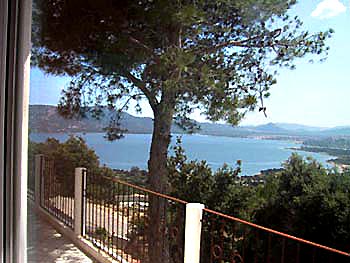
We have several beautiful villas available in Corsica. http://www.southfrancevillas.com/holiday-villas-in-corsica One of these is the CR001A Marina di Fiori, located in Porto-Vecchio with stunning views of the Porto-Vecchio gulf. Porto Vecchio is a very popular town in Corsica - and with good reason. The beaches here are among the best on the island and there are so many flawlessly beautiful beaches and coves in the vicinity that you could spend each day of your holiday exploring a different beach. The beaches are mostly child friendly, with their shallow, warm water -- although only the most popular beaches have lifeguards. A villa in Porto Vecchio also makes a great base to explore other parts of Corsica, such as the nearby mountains and prehistoric sites inland from the town including those at Tappa and Sotta.
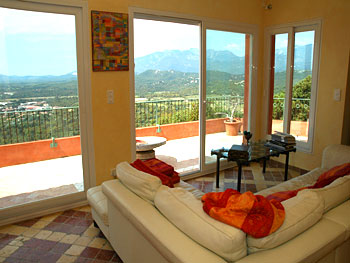
The Villa itself is very comfortable, with fantastic views and filled with sunlight. With five bedrooms, a fully equipped kitchen (plus two kitchenettes), living and dining room and a private pool, this spacious villa is perfect for a large family or two families vacationing together -- with plenty of space for everybody! There is also a two-car garage, which is very convenient -- hiring a car whilst in Corsica is a very good idea, as public transport can be patchy and taxis are quite expensive.
If you have any questions or would like to discuss your Corsican holiday in more detail, please don’t hesitate to contact us! We would be very happy to help.
Contributions by Katarina Byrne


