Welcome to the

South France Villas Blog

Tuesday, 29 June 2010

History and Art in Arles - Van Gogh, International Photography Festival & Roman Architecture


Arles is a great destination for art-lovers. Vincent Van Gogh was famously a resident in Arles. He may have only spent about a year in the town, but it had a profound effect on him. 

 During his time here, he produced over 300 paintings and drawings - and it was here that he established the distinct post-impressionist style for which he is known. What was it about Arles that attracted Van Gogh? He loved the local landscape and the people who lived there and the vibrant colours produced by the bright Provencal sunlight.

You can visit many sites around Arles which actually inspired Van Gogh. There are 10 easels placed at the same vantage point of his original works. You can get a map at the Tourist Information office showing you where each easel is located -- or you could turn it into a bit of a scavenger hunt and try to find all 12 on your own!


You can also visit the Cafe which he frequented. It may be slightly over-priced, but it's worth it to grab a coffee and bask in the atmosphere which drew Van Gogh to the establishment.


There's more to Art in Arles than the legacy of Van Gogh, however! 

The city is also famous for a fantastic international Photography Festival which has run every summer since 1971. The Festival is opening this weekend (Saturday, July 3rd, 2010) and running until mid-September. You can find out more at this website (available in English - click the British Flag at the top of the main page). There are also several museums which are worth a visit. The Arles Folk Museum is particularly interesting, providing an insight into the tradiitons and culture of the region.

As well as being a cultural centre, Arles is also an important historical city. The Roman architecture is beautiful and many of them have now been World Heritage Listed. In many cases these remains have been well preserved. In fact, even after 2,000 years, the amphitheatre is still in use today! During the summer months it hosts bullfights, and it is open for tours all year. The bullfights are definitely a must-see. They often have Provençal-style bullfights at the arena -- those who are uneasy at the idea of a bullfight might prefer this style. In the Provençal-style, the bull isn't killed. Rather, a team of athletic men attempt to remove a tassle from the bull's horn without getting injured.


A nice day trip from Arles would be to visit the Camargue. You can read more about this enchanting region in one of our earlier blog posts.

For a range of beautiful, charming and luxurious villas near to Arles and elsewhere in the south of France visit our website www.southfrancevillas.com

Monday, 14 June 2010

NIMES - The Old and the New

Home to the greatest wealth of ancient buildings in France, travellers have long flocked to this historic city. Nimes was established as a Roman colony around 28 BC and became one of the most important towns in France, positioned on the route between Italy and Spain. Its prosperity during this period can be witnessed by the many remains of many Roman buildings which can still be visited today. One of the most impressive of the Roman buildings is the elliptical Roman amphitheatre, which looks just like the one in Rome. It was built sometime around the 1st century AD and it is the most well-preserved Roman arena in the country. Back in the days of the Romans, the amphitheatre seated 20,000 blood-thirsty spectators for gladiatorial combats. It is still in use today as an arena for bull fighting and concerts. The UNESCO World Heritage listed 'Pont du Gard' is also a highlight. The bridge has three levels with an aqueduct on the top level. Incredibly, the precise construction of the bridge eliminated the need for the use of mortar at all. The stones were cut to fit together perfectly, despite the fact that some of them weighed up to 6 tons! And you can't miss the Maison Carrée (AKA 'Square House'), which is the best-preserved Roman temple anywhere in the world.


Yet it's not all ruins and Romans. Whilst preserving its historic splendour, Nimes has become a vibrant and modern city. Friendly competition between nearby Montpellier has sparked a wealth of innovation in Nimes. It hopes to be recognised the most dynamic and energetic city in the Languedoc. By enlisting architects such as Jean Nouvel and Philippe Starck, Nimes is well on its way to overtaking Montpellier!

If you get an overdose of visiting the monuments and ruins, wandering the streets of the old town in a pleasant pursuit in itself. Stop and have a leisurely coffee at one of the many cafes during your explorations. With 300 days of sunshine, take a seat outside the cafe to bask in the warm sun and people-watch as the pedestrians pass by. The Jardins de la Fontaine ('Gardens of the Fountain') is lovely, too. It is built around the Roman thermal ruins and features fountains, trees, grottoes and a lovely view from the Roman tower. Nimes also has many museums, which you could peruse in the unlikely event of rain!


Apart from the Roman ruins, Nimes also has another large claim to fame - it is the home of Denim! Get it - Denim... De Nimes? The fabric was originally named 'Serge de Nimes', and at some point the 'Serge' was dropped and the name became Anglicised into today's word, 'Denim'. During the 1849 Californian gold rush, Levi Strauss was engaged in the profitable business of manufacturing trousers for miners. In search of a sturdy fabric which would withstand the tough conditions in the mines, he stumbled upon 'Serge de Nimes'. He began to import it and it became incredibly popular - as I'm sure you're aware of!


Villas

Looking for a nice place to stay near to Nimes? Consider a beautiful villa for your holiday in Southern France!


GR009A Mas Sevenne
Sleeps 8-10
A very spacious hill top village house in the foothills of the Cevennes, near St Hippolyte du Fort, in the Gard. Large private garden with swimming pool. A blend of old stone and contemporary. All rooms and terraces have stunning views.
GR008A Villa Nadege


GR008A Villa Nadege
Sleeps 12.

Villa Nadege is an exceptional and quite luxurious country house which has been finished and decorated to an extremely high standard with a large attractive garden, a huge summer kitchen, and a private heated pool measuring 12mx6m.


It is situated on a hill in a picturesque Mediterranean village, in an area of great natural beauty with great views; an intimate landscape of small hills with limestone scarps and 
hardy Garrigue woodland.

GR010A Domaine Fontaine du Mas

GR010A Domaine Fontaine du Mas
A huge stone-built farm in the Cevennes foothills close to Uzes, sleeping up to 30. Private park with tennis court and pool. This large villa in the Languedoc is ideal for large groups as well as weddings, seminars, family reunions and celebrations.

For more of out properties check out our website www.southfrancevillas.com.

Contributions by Katarina Byrne

Sunday, 16 May 2010

THE CATHAR ROUTE - Castles in the Sky

Ready yourself to delve into some history and hiking! This entry will explore the Cathar Castles, in particular a couple of lofty ruins which have been named the Languedoc's 'Castles in the Sky'.
History of the Cathars


The Cathars were ascetic types - they didn't eat meat, eschewed alcohol, and avoided material possessions. The idea was that by doing this they could escape the corruption of the world. Whether they were successful or not in their endeavour, the Catholic Church took exception to differences in their religious doctrine, and in 1208, they launched a Crusade on the Cathar Church. (The fact that the Cathar nobles in Languedoc also owned very valuable land may have also been part of the motivation..!)

The inner circle of Cathar leaders, (named 'Bonshommes', or 'good men') fled the Crusaders by a route now known as the 'Chemin des Bonshommes'. It was an arduous journey of 220 kilometres, from the Medieval town of Foix, over the Pyrenees and to the relative safety of Spain. On the way to Spain, they stopped at Cathar castles for shelter. These Cathar castles were soon set upon by the Crusaders. Whilst the fortifications and geographical advantages of the sites held strong against the invaders, supplies eventually ran out and they were forced to surrender.

The sieges and massacres that occurred during these Crusades were vicious and bloody -- many atrocities were committed. Today we see the destruction and devastation of this group of people through the crumbling, stark, lonely ruins which still stand in the Languedoc region.


Cathar Hiking Routes

The routes which the Cathars used to flee from the invading Crusaders are today a destination for travellers with a taste for re-tracing history and those who simply enjoy wandering through gorgeous wilderness.

The hiking routes mostly centre around the atmospheric ruins of Cathar castles - picturesque and haunting, these majestic ruins sit starkly on the summits of rocky mountains. Their position was chosen for strategic military reasons and today we can enjoy these vantage points for their incredible views of the surrounding land.

There are many sections of the Cathar route which you can explore: the entire 'Chemin des Bonshommes' route takes around twelve days to complete on foot! But if you're looking for something a little more relaxed than a 12 day hike, we suggest renting a villa in the area and exploring sections of the route at your leisure.


At South France Villas, we are fans in particular of the walks around Quéribus and Peyrepertuse.

Peyrepertuse (meaning 'Pierced Rock')is a ruined fortress, perched at a lofty 800m in the Pyrenees. Peyrepertuse clings to a narrow, rocky ridge 70 metres wide and 300 metres long. Its precarious position makes you wonder at how such an architectural feat was possible back in the Middle Ages. How did they manage to haul building materials and construct the Castle all the way up there? It's enough of a hike as a tourist carrying only a digital camera and a bottle of water! But the exertion to reach the summit is definitely well worth the effort. Not to mention that the scenery on the way to castle is delightful in itself -- it is a winding route with lovely trees, rocks and wild flowers greeting you around every twist and turn.

Nearby, you'll find the smaller castle at Queribus. It is a shorter walk than the climb to Peyrepertuse, but steeper. The views are less dramatic here, but it makes up for this with the interior of its castle which is the more interesting and well-maintained of the two.

You need good walking shoes for both these walks, but you don't need to be an Olympian to attempt them. In fact, if you take it slow and steady, you don't really need to be very fit at all!
For more walks in this region, there are several good books which provide extensive information. For example, this one from amazon.com.
Another must-see in the region is the city of Carcassone -- you can read all about it in an earlier blog entry here.


Villas in the area

We can recommend a set of three beautiful holiday villas owned by a couple in the village of Cascastel, with lovely rural views over the surrounding vineyards. They are separate accommodations and are generally rented individually, however large groups can rent two or even all three of these luxury villas.

The owners run an organic 12 hectare wine domaine from a wine 'cave' next door - so no need to travel far for a wine tasting! The villas are typically French, built in the early 20th century - although since then the owners have renovated them to include modern conveniences, such as ensuite bathrooms.

AU010A Maison Guilhem 10-14 people
AU012A Maison des Vendangeurs 10-12 people
AU014A L'Estiu 4 people


If you don't want to spend all your time hiking, there are plenty of other things to do in the region also. Nearby to Cascastel you can find beaches, canoe hire, bike hire, golf, horse riding, hang gliding, boules, vineyards, a African Safari park and more! Also there are some great historic towns to discover, such as Narbonne, Carcassone, Beziers and Montpellier.

We hope we've inspired you to discover this wonderful part of South France - if you have any enquiries please VISIT OUR WEBSITE  www.southfrancevillas.com. We'd be more than happy to help!


Contributions by Katarina Byrne

Saturday, 10 April 2010

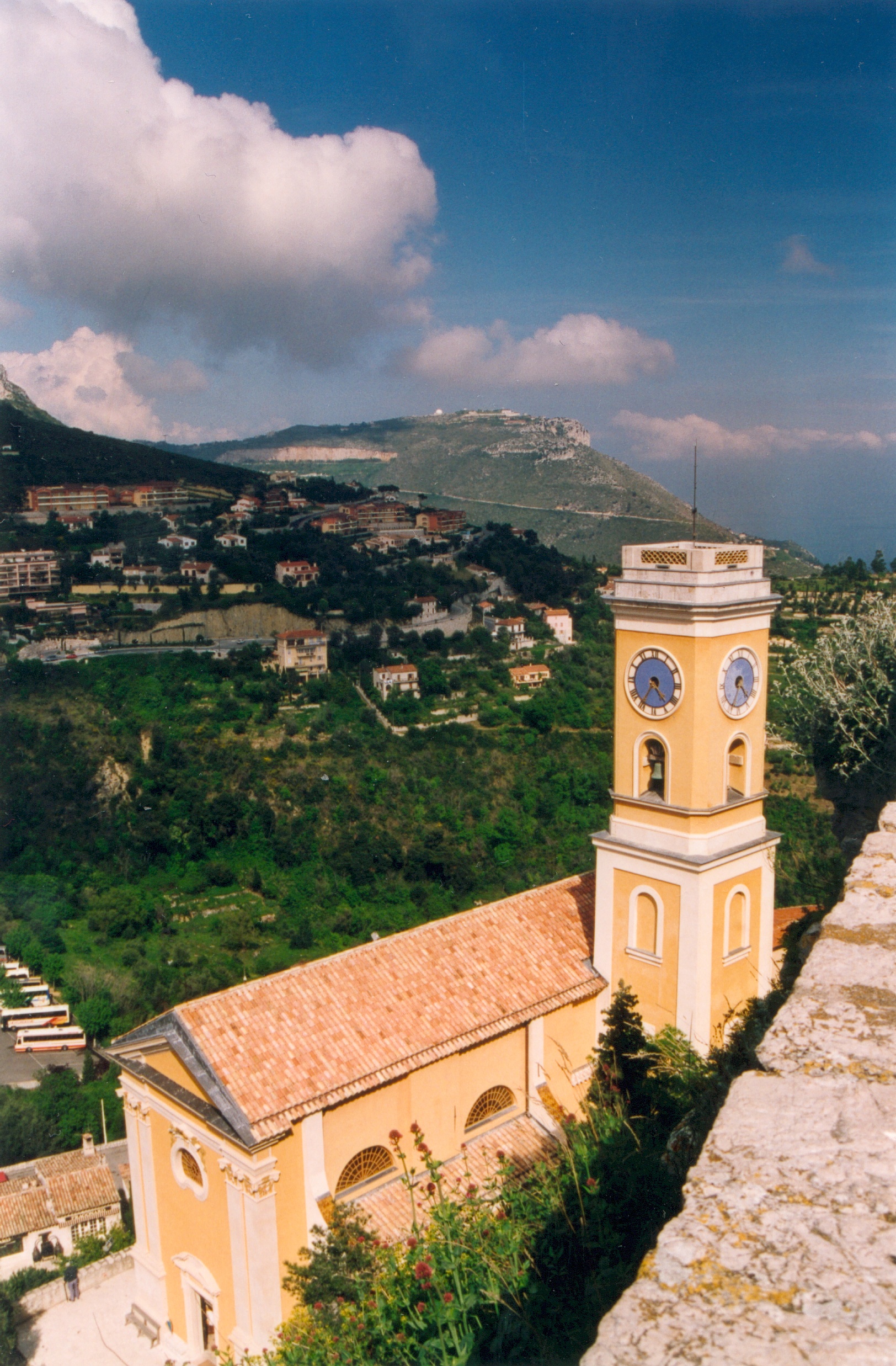
Eze - The Fairytale Village of the Cote D'Azur: Beaches, U2 & Botanical Gardens

Eze is a town so picturesque you can barely believe it's real. Perched precariously 427 metres above sea level upon a hilltop which runs down to the seaside, this medieval jewel is a holiday destination to rave about. Coastal, tropical and historical - what's not to love about this place?


The beach is easily accessed from the village - it's about a half-hour walk down Chemin de la Mer, shaded by pine and olive trees. Once you reach the bottom, you will find typical Mediterranean beaches and plenty of things to do - water sports, swimming, sun-bathing, alfresco dining, picnics.

 If you are a U2 fan, you could even hunt for Bono's villa - the beach which it overlooks was the location for the filming of the video clip for U2's song 'Electrical Storm'.

Yet Eze is not simply a coastal town - it has even more to offer. Nearby is an enormous forest of over 600 hectares. If you enjoy hiking through natural splendour, you should be more than satisfied with what's on offer here. 

The vegetation in this region is lush and tropical - the warm climate fostering the growth of bananas, dates, oranges and pine trees.

The Village itself also offers many hours of exploration and enjoyment. Set upon on an imposing cliff overlooking the ocean, it isn't hard to lose yourself in the stunning panoramic views. Wander the narrow winding streets and browse the many boutiques. Some of these shops are in charming cave-like buildings, carved into rock. Squeeze inside these tiny boutiques to browse for some original gifts or art for those unlucky enough to be left back home, or even a special gift for yourself!

Eze also contains an exotic botanic garden with rare species of plants, with 360 degree panoramic view of the Cote D'Azur. The collection of Cactus from Africa and America is a refreshing contrast against the French countryside. Among the succulents are 400 species of exotic plants flourishing in the mild, warm climate of Eze. The gardens were created in 1950 on the ramparts and ruins of a 12th century castle.

If these descriptions aren't enough to convince you of the town's enchanting fairytale charm, take it from Walt Disney, who spent a great deal of time in Eze. According to the locals, the town also inspired Nietzsche in the writing of his famous work, 'Thus Spoke Zarathustra'.

This village is extremely popular and sometimes the charm of the town can be overwhelmed by the swarms of tourists - don't let this put you off though. 

 Generally, the masses of tourists only stop in the town for a few hours, snapping up a few souvenirs before jumping back on to the bus and driving off to the next town. 

 So while it may become swamped by tourists for a few hours around the middle of the day, the town remains relatively quiet during the early morning, late afternoon and the evenings.  

If you want to avoid the hub-bub, go for a picnic on the beach or in the forest during the middle of the day, and return to lazily stroll through the village as the sun begins to head for the horizon. If you really want the place to yourself, avoid summer and enjoy it in the spring or early autumn.

Another plus about this town is that it is only a few kilometres from Nice - one of the best cities in France. There's plenty to do and see in Nice and it is well worth taking the time to explore it. It is also very close to ritzy Monaco if you feel the need for some glitz and glamour.

Where to stay?

For a range of luxury villas in Alpes-Maritimes visit our website www.southfrancevillas.com.


Contributions by Katarina Byrne

Tuesday, 23 March 2010

GOLFING in Languedoc


A golfing holiday in the South of France is a great option, as the warm climate and gorgeous scenery can only add to the pleasure of the sport. Some of the world's best golf courses can be found in France - more than 25 of the top 100 courses in Europe are in France.


One of our favourite courses is in the Beziers region of the Languedoc - Golf Saint-Thomas. This 18-hole course is set in typically Mediterranean scenery. The still lakes and the quiet of the surrounding area makes the course perfect for a relaxing game of golf. The feeling of being surrounded by nature is enhanced by the abundance of wildlife wandering around - you will see ducks, partridges, hares and rabbits, confirming the impression of a place of natural interest.


Although the Course is suitable for those without much experience, it also contains alot of variety and enough challenges to keep even the experienced entertained. The 15th, 16th and 17th holes in particular are quite tricky, with those calm, peaceful lakes ready to mischieviously swallow your golf balls given the slightest opportunity.


There is also a restaurant at the clubhouse, which features an inventive menu of simple but tasty fare. A selection of local wines are also available to accompany your meal.


Where to stay?

We have two beautiful villas on the Golf Course.

HE038A Domaine du Golf is a luxurious country house which is right on the Golf course - exceptionally convenient for avid golfing fans! It is two minutes walk fro the clubhouse and restaurant. It houses up to 14 people and has 7 bedrooms. This beautiful vacation home has recently been refitted and furnished up to a very high standard. It includes Air conditioned bedrooms, a fantastic large roof terrace, and a swimming pool, plus flat screen TVs in all bedrooms, a well equipped children's play area, and some services like baby sitting are available on demand.


For more details, please click on the above links to the villas. We also have many more lovely villas in the vicinity - please visit our website for more information.


Contributions by Katarina Byrne

Saturday, 13 March 2010

Gordes - The Heart of Provence: The Luberon - Hiking & Lavender

Peter Mayle's books about his life in the Luberon - a region in Provence - made the region famous amongst Anglophones. 

 His lively anecdotes caused many a day-dreaming armchair traveller not only to visit the Luberon - but in fact it inspired many to uproot their lives and move into their own beautiful French villa in the picturesque Luberon.


Peter Mayle was not the first person to discover the Luberon, however. Long before the 1990's, Provence intoxicated people with its natural beauty. In the 19th and 20th centuries, famous painters and writers flocked to the area in search of inspiration. The painters in particular were drawn by the special quality of the light. 

The light in Provence has an exceptional clarity, caused mostly by the famous 'Mistral' wind, which removes dust from the atmosphere and increases visibility. Van Gogh, Cezanne, Matisse, Renoir, Picasso, Monet and many others travelled to the area, fascinated by the effects of the light and the beauty of the landscape. This region of Southern France also enjoyed a particular vogue during the 20's and 30's with English writers.

And yet despite the ever-increasing interest in the Luberon, it has largely managed to remain the idyllic, wild and charming place which caused all this fuss in the first place. You will still see old men playing Petanque (Boules) on a lazy sunny afternoon, you will still find small isolated villages clinging precariously to wild rocky mountainside, and you will still feel the intoxicating energy which has inspired so many artists - whether you are artistically inclined or not.

The Luberon - places to go and things to see


The Luberon is arguably the true heart of Provence: a land of rugged limestone cliffs, wind-swept mountains, old stone huts and ruins, crumbling farmhouses, and beautifully-restored homes. And above all, sweeping views of the stunning landscapes. We would recommend that you make a top-quality vacation villa your home-base in the Luberon, and make day-trips to explore other areas in South France. That is, if you can pull yourself away.


One of our favourite spots is a little town called Gordes - officially one of the most beautiful towns in France. What makes it so special? The approach to the town is spectacular - white stone buildings grasping hold against the side of the sharp cliff of a mountain. Find yourself wandering its charming streets which form a labyrinth of winding cobblestone, perusing the weekly market, or throwing yourself into its vibrant art scene.


Hiking is very popular in the Luberon. It not only offers stunning landscapes, but there is also a surprising variety amongst these landscapes. There's little chance of becoming weary from repetitive views in this region of France. Not only is there scenic variety, but there are also trails which vary in their level of difficulty and length -- so regardless of your experience, there will be something to suit you. For more information in hiking in the Luberon, this page from Slow Travel France is very informative and useful.


When you think of Provence, one of the first images in your mind will probably be of fields of Lavender. In the Luberon, you can find an interesting museum on that very subject - the Lavender industry. The Lavender Museum collection includes photographs, artefacts, a video and a very good audio guide. There is also a gift shop where you can buy many quality Lavender products. The best time of year to visit the museum is from the first of July through tp the 25th of August (except on Saturdays!), when you can watch the harvesting and distillation of the Lavender in a copper still dating from around 1900. (During the rest of the year, there is a 10-minute video showing these processes.)

The Markets in the villages of the Luberon are a festive affair not to be missed. Some of the busier markets verge upon a carnival-like atmosphere, with many different things to see, sample and buy. The centre-piece of these markets is the fabulous fresh food. Pick up some fresh cheese, vegetables and fruit and head off into the countryside for a picnic. What could be better than that? You will also find clothing, jewellery, crafts, and many other things.


Finding a Villa


We have many beautiful villas in the Luberon to suit various holidays. Below is a selection of high quality villas from the Luberon region. Please don't hesitate to contact us - we would be more than happy to assist you.

The Cypresses - 15 people - Gordes
Maison Bijou - 8 people - Goult
Maison Sophie - 8 people - Goult
Maison Amandine - 8 people - Goult
Maison Cerise - 8 people - Goult


Contributions by Katarina Byrne

Monday, 8 February 2010

Carcassone - A Fairytale City & Chateau Aragon

This UNESCO world-heritage listed city is one of the most popular tourist destinations in France, drawing about 3 million tourists each year. As the largest citadel in Europe, it provides many winding cobble-stoned alleyways in which to lose yourself in the romance of this fairytale city. 

 The town is divided into two parts - the star attraction is the the fortified city, which consists of a double ring of ramparts and 53 towers. Perhaps of lesser interest is the 'ville basse' (lower city) which lies in the shadow of the fortifications. 


History


Carcassonne was settled perhaps as early 3500BC, but it wasn't until the arrival of the Romans that it began to grow into an important city. Recognising its strategic hill-top position, the Romans began to fortify the city around 100BC. 

 You can still see the part of the fortification which the Romans built: the main part of the lower northern ramparts dates from Gallo-Roman times. It retained its importance throughout the Middle Ages, controlling a vast fiefdom. Throughout this time the city had close connections with Spain - although this was not always a friendly relationship. Carcassonne became a major defence point against Spain, as a border citadel between France and the kingdom of Aragon in Spain. 

 Yet Carcassone's real moment of fame came when it played its part in the Crusades. A stronghold of Occitan Cathars, it held out against crusading armies until August 1209, when the city was forced to surrender. After the Treaty of the Pyrenees, the military importance of the city was made redundant. Instead, it made a new name as an economic centre, becoming heavily involved in the woollen textile industry. Under Napoleon, the city was struck from the list of official fortifications. It wasn't long before the fortified cité of Carcassonne fell into such disrepair that talk began of demolishing it altogether. It took an outraged group of French citizens to get a campaign up and running to preserve the city as an historical monument - and luckily, they succeeded. Despite a few minor inaccuracies, the restoration was deemed a work of genius and today still attracts many admiring travellers.


Things to see and do

The first thing on the list is a Tour of the Ramparts - check out the tour times as soon as you get there so that you don't miss out. Tours of the main residence, ramparts and towers are run from the Chateau Comtal, and are included in the entry price. These areas can only be accessed on one of the tours. The tour puts both the history and architecture of Carcassonne into perspective, and so allows you to fully soak in the beauty of the fortification and the stories behind it.

Visit one of the most impressive Cathar sites just a short drive from Carcassonne in the Montagne Noire (Black Mountain). There are four castles at Lastours - Cabaret, Tour Regine, Surdespine and Quertinheux.


The Basilique Saint-Nazare is a beautiful 5th-century cathedral featuring stunning stained glass windows. Part Romanesque and part Gothic, the cathedral is an interesting mix of architectural styles. Its cavernous interior and the stone tablets and gravestones which hang from the walls give the cathedral a sombre and an imposing atmosphere.

The Canal du Midi was built in the 17th century to link the Mediterrnean and the Atlantic. Today, you can take a 90 minute cruise along the canal from the port in Carcassone. Another lovely option is to take a cycle or a walk along the banks, under the shade of the plane trees which line the canal. Its historical importance was recognised in 1996 when it was listed as a UNESCO World Heritage site.

There are also a number of museums in Carcassone. In particular, we recommend:
Museum of the Middle Ages, Museum of Chivalry, Arms and Archery and Museum of Fine Arts.


For more information, visit: www.carcassonne.org

Chateau Aragon (AU006A)


If you are interested in visiting Carcassone, we have the perfect villa from which you can thoroughly enjoy and explore Carcassone and the surrounding areas.

Chateau Aragon (AU006A) is itself an historical experience -- parts of this genuine French chateau date as far back as the 12th century. Only a short drive from Carcassone, you will find Chateau Aragon perched resolutely at the top of a medieval village, from which it has surveyed the surrounding plains and mountains for around 800 years. The Chateau has recently been furnished and renovated, with a refreshing breath of modernism to strike a balance with the weight and depth of the building's history. All furniture was made to order in Bali, Indonesia – using the rarest, highest quality wood with simple designs to blend harmoniously with this quality villa's character and medieval history.


This spacious luxury villa can accommodate up to twelve people more than comfortably - an abundance of sofas ensures that nobody is left without a comfortable place to sink into at the end of a day of exploring and activities. In fact, you might get so comfortable that it could be difficult to drag yourself away - a summer-time sejourn may see you immersing yourself in good book by a sunny window, or reclined cozily by the 18th century wood-panelled fireplace in winter.

Yet the luxury of the interior rooms is actually almost overshadowed by what lies outside. On the expansive terrace you will find a large dining table, perfect for Alfresco dinners - what could be better than a fresh meal prepared from local produce, accompanied by views of hilly vineyards? On a clear day, one can even see the snow-capped Pyreenees. Set amongst the blooms of the Garden are 12th Century original Gargoyles. The real jewel in the crown however is surely the ruined historic wall, which provides a dramatic backdrop to the blue of the pool. The magnificent stone edifice was once part of the Chateau's interior structure - an insight into the evolution of a building which carries the echoes of the past.


Aragon’s Château, during the 800 years since the construction of its original elements, has been the theatre of numerous conflicts, battles and jealousies. Without the ownership or military domination of the Château, the population would not be subordinated and the economic and military domination of the surrounding lands would not be secured.

The Lord of Aragon offered a home to several Cathar priests at the end of the 12th Century to protect them from the terror of the Royal Army. In 1126, as recompense for his loyal services, the Viscount Trencavel honored the Lord of Aragon with the guardianship of a tower of the Cité of Carcassonne.


Today the Château is at last peaceful, a superb villa residence, in which traces of the past harmoniously blend with the interior design and modern comfort.
Nearby activities and attractions:
- Bike hire
- Horseriding
- Golf
- Lakes and Parks
- Superb Wineries
- Mediterranean Beaches
- Restaurants

Contributions by Katarina Byrne