Welcome to the

South France Villas Blog

Thursday, 21 June 2012

Eze-sur-Mer

EZE-SUR-MER AND EZE VILLAGE - IDYLLIC RIVIERA ESCAPE


Eze, cote d'azur
The village of Eze (www.eze-riviera.com) is a stone’s throw from the magical Monte Carlo and South France Villas property AM006A Villa Eze 


AM006A Villa Eze


Villa Eze is the perfect location to explore this traditional village, (also known as the “eagles nest” due to its amazing views) and the world famous Riviera.


Follow the village cobbled street (which the donkeys use to transport goods and luggage!) and take coffee on the balcony of the Chateau Eza Restaurant - www.chateauezarestaurant.com which will afford you a unsurpassed vista of the Cote d’Azur coastline 


or meander through the Exotic Gardens at the very peak of the village and enjoy the stunning views and get some “Zen time”.


Or if the mood takes you head off to the Casino at Monte Carlo www.monte-carlo.mc

Wednesday, 20 June 2012

Villefranche Sur Mer


VILLEFRANCHE-SUR-MER  - Chic living on the Cote d'Azur.

AM029A Villa Sur Mer
This lovely chic “fishing port” between Nice and Monte Carlo is the ideal location to enjoy all  that this wonderful part of the Cote d’Azur has to offer and if you are staying at South France Villas property AM029A Villa Sur Mer all of this and more is on your doorstep. 

www.villefranche-sur-mer.com

Why not meander down to the waterfront, take an aperitif, people watch and enjoy the  hustle and bustle harbour side as the private yachts anchor in the bay, before visiting one it’s most famous restaurants La Mere Germaine  established in 1938 it’s tradition of fine tables, hospitality, comfort and gastronomy - specialities of fish and seafood particularly the famous bouillabaisse, one of the best in the Region…


Don’t forget too an hommage to Jean Cocteau (writer, poet, artist) is in Villefranche-sur-Mer – so you can get some culture! www.jeancocteau.com


Tuesday, 19 June 2012

MARSEILLAN

The Rive Gauche in Marseillan - www.marseillan.com is a lovely spot to while away those long holiday lunches, sit on the port and enjoy tapas or oysters in the array of restaurants lining the port.  Noilly Prat is opposite so why not take the tour – it is fascinating!


If you are staying at at one of South France Villas properties in the Herault, Languedoc Roussillon, such as HE011A Villa Ramistan, the village and port of Marseillan are just a stone’s throw away.

Saturday, 30 July 2011

GRASSE - The International Capital of Perfume

Travellers have long been attracted to the pleasures of Grasse. Queen Victoria herself returned for several winters to sojourn in a luxury vacation home in this medieval town. While there are many things to do and see in the area, it is the clean crisp air scented with flowers that seduces those who visit. The altitude and the looming hills behind the town create the freshness in the atmosphere - a contrast to the beach towns of Provence, which often swelter in the Summer.

Perfume


Grasse began making Perfume way back in the 16th century as almost an afterthought. Making perfume was simply a side-project to a solid industry in manufacturing gloves - when perfumed gloves were briefly in fashion, Grasse decided to manufacture their own perfume. Yet today the gloves have been all but discarded, with the Perfume industry having been gradually built up to become a dominating figure in the Perfume World. Today, Grasse produces around two-thirds of France's perfumes. Part of the reason that Grasse has been so successful is because the particular climate of the region is perfect for nurturing delicate flowers which struggle in other regions.

There are three historic perfume manufacturers in Grasse which provide free guided tours. You will learn about perfume and how it is made and later will have the opportunity (without obligation) to browse and buy their products.


  • Galimard 73 rte Cannes tel: 04 93 09 20 00
  • Fragonard 20 bd Fragonard tel:04 93 36 44 65 fax: 04 93 36 03 50
  • Molinard 60 bd Victor Hugo tel: 04 93 36 01 62
Interesting Perfume Facts:
Other Recommended Attractions
Olive Oil is also produced in Grasse:
41 Chemin des Paroirs,Tel: 0493 701 674, or 0618 188 415
Caving

Caving


- A perfume contains between 10 to more than 250 ingredients.

- A scent that smells good on one person will not necessarily smell good on another. This is because the interaction between the fragrance and the body may produce a different scent perception in different people due to their body hormonal balance.
- Diets, way of life and medication will affect or influence your sense of smell
- The sense of smell is sharper in the afternoons
- Fragrance lasts longer on oily skin than on dry skin
- Some researches have shown that people without a sense of smell lead a less happy life than people who can smell. There are different types of fragrances that trigger emotions and affect the mood of people who smell it.


Musée d'Art et d'Histoire de Provence - Located in an 18th-century mansion, this museum features archeology and ethnology as well as Provencal painting, pottery and history.


Notre Dame du Puy cathedral - Dating from the 11th Century, (rebuilt in the 17th c.) this cathedral boasts a huge 18th century clock tower and an art collection featuring Rubens.


Festivals - The Fête du Jasmin or La Jasminade has been celebrated every year at the beginning of August since 1946. These days, it is a big event; decorated floats drive through the town, with young women throwing flowers onto the crowds which line the streets -- everyone gets soaked by the natural perfume of the flowers. There are also fireworks, free parties, folk music groups and street performers. Also popular is the annual 5-day international exhibition of roses ("Expo Rose"), which occurs in May.


Royrie Domaine - Domaine de la Royrie Royrie88 Chemin des Haute Ribes,Tel: 0609 866 327
Sainte-Anne Oil Mill - Moulin à Huile Sainte Anne
138 Route de Draguignan,Tel: 0493 702 142


For those feeling adventurous, this is a fantastic area for caving. If you are a member of a 'spelunking' organisation, there are many caves available to explore. However even those who are inexperienced in caving can get involved. Cavers can descend into the Trou du Curé (60 metres underground) or explore the cave at the Saint Sauveur waterfall. For those who don't fancy journeying underground, there are also many hiking trails in the area.


As you can see, a holiday in a beautiful villa in the Grasse region allows you to experience a large variety of acitivites, a unique culture and history - all within a picturesque setting.


Nearby Villas

We have a selection of gorgeous luxury villas nearby to Grasse. We are expanding our villa rental program in this region all the time, always looking out with a sharp eye for the best quality villas in Cote d'Azur.

We have two luxurious holiday villas in this region which we recommend in particular:


AM003A Villa Ferrage
AM019 Tourettes-sur-Loup


Thanks for reading, and we hope that you have learnt something about this wonderful region in France - whether solely for interest or whether you are researching a holiday in the South of France. Don't hesitate to contact us if you have any questions.


Contributions by Katarina Byrne

Tuesday, 28 June 2011

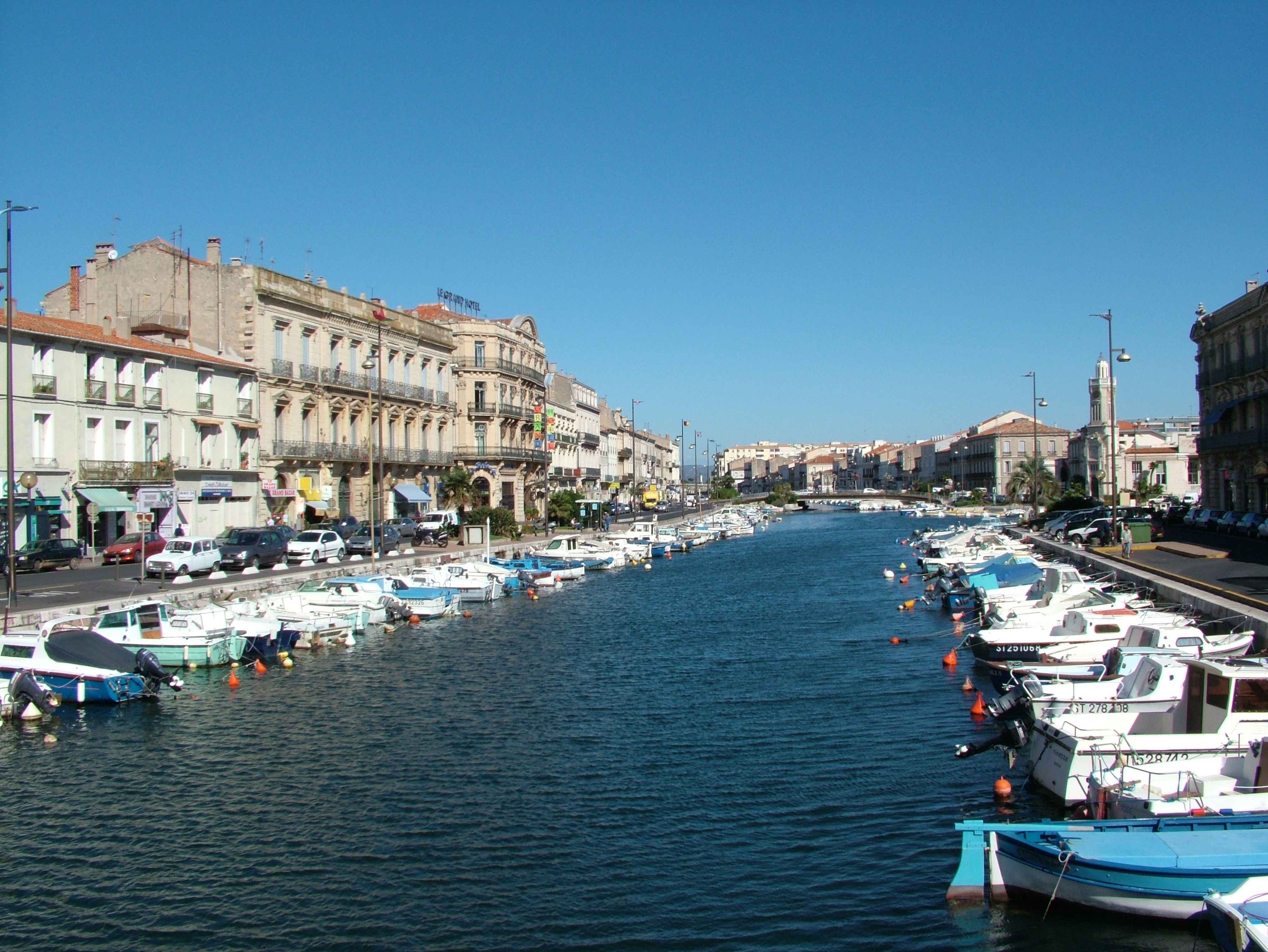
SETE- The Venice of Southern France


This romantic port town has been named the Venice of Southern France for its numerous canals and quaint streets. It is also admired for its beautiful beaches, scenic views and the rusty ochre tones in which the buildings are painted.

Although the area has been inhabited since the Bronze Age, it was sparsely populated until the 1600's, when work on the creation of the port of Sète began. The construction of the port and city took 15 years, and the work included the building of dozens of dykes, basins, bridges and aquaducts. Today, Sète's pretty port is not only a drawcard for travellers, but still functionally important, acting as a major centre for fishing in France.

The town is divided into two parts - the Port and Mount St Clair.

The Port:

Sète is great for water sport enthusiasts: sailing, swimming, scuba diving, water jousting tournaments -- Sète has almost every water sport you could imagine! The closest beaches to the town are Lazaret Beach and Corniche Beach, which are lovely. You can also see some of the fastest sailboats in the world, as Sète is where the French do their training for the America's Cup.


Jousting tournament
-- Every summer, the "Joutes Nautiques" is celebrated in Sète on the canals. It is similar to the traditional medieval jousting on horseback, except that the 'horses' are special canal boats, manned by ten oarsmen, and the knight gets a swim in the canal if he is 'de-horsed'! The winner of the tournament gets their name engraved on a shield, which can be seen on display in the Musee Valery.


Gastronomy -
Sète has many good restaurants and a number of delicious local specialties:
Bourride - monkfish in garlic mayonnaise or "aioli"
Bouillabaisse - A hearty stew combining fish and shellfish
Le Tielle - A fish and tomato tort
La Rouille de Seiche - A mix of fish, tomato sauce and aioli.

Daily markets
- The daily open-air market offers an array of fresh produce. On Sundays, there is a great flea market.


Canal du Midi - The historic Canal du Midi ends in Sète, 240km from where it begins in Toulouse. The Canal was originally constructed as a short-cut, saving a whole month of sailing, and avoiding hostile parts of Spain and Barbary pirates. The Canal du Midi was opened officially as the 'Canal Royal de Languedoc' on May 15, 1681. The Canal is quite complex, consisting of intricate locks, bridges, aqueducts, dams and a tunnel. It was still used commercially until 1989, but now the Canal has become more of a tourist attraction and place for leisure activities - such as rowing, canoeing, fishing and cruising on luxury hotel barges.

Mount Clair:
The climb up from the port to Mount St Clair is well worth the effort. There are great views of the village and port below, and also of the Pyrennees. The main cultural attractions are also to be found up here too.

Chapelle Notre Dame de la Salette
- This church has been many things - first, it served as a fort for the Duke of Montmorency, but when it was dismantled in 1632, is became home to hermits. The hermits spent their time charitably, praying for the souls of fisherman and lighting fires to warn of approaching pirates. In 1897, the structure was converted into its present form - the church, decorated with scenes of life in Sète.


The Sailors Cemetary (Le Cimetiere Marin) - This cemetary was constructed in 1843 as a resting place for sailors. It was built using old rock that had been used in the building of the port itself. The cemetary was immortalised by the poet Paul Valéry, in his poem "Cemetery be the Sea". Valéry was born in Sète and is buried here.

Musée Valéry - Nearby to his resting place in the Cemetary is a museum dedicated to Valéry. Here you can find not only mementos and works of the poet, but also exhibits relating to the history of the town. There is also a room devoted to another famous inhabitant of Sète - the singer Georges Brassens.


Sète is also a good base for exploring the South of France - it is nearby to many other attractive towns and cities, such as Montpellier, Agde and Beziers.

Villas

We have two stunning modern villas in this area that we recommend in particular.

HE063A Villa Setoise
HE065A Villas St Clair


Chic, spacious, and overlooking the beach, a holiday in either of these beautiful holiday homes would make for an unforgettable experience.

Luxury greets you from arrival, with a champagne reception awaiting you. The lovely soft furnishings ensure that you'll immediately feel comfortable and at home. Both villas contain many conveniences, such as an espresso machine, home cinema, sauna, children's games room, board games, wifi and secure on-site car-parking - as well as much more.


There is even a 4 half days complimentary water sports package, organised and provided by our in-resort water-sports manager and instructor. Enjoy water skiing, a kayaking trip, and paddle boarding. There is also a good range of bicycles for adults and children and our in-resort staff can also arrange additional activities and excursions as part of the service
.


But wait, there's more! Fresh bread, pastries and papers will be delivered on a daily basis, and the bathrooms are stocked with gorgeous l'Occitane products.

A holiday in one of these villas is truly a luxury experience!

For more information or to make a booking, please visit our website. If you have any questions, please contact us - we would be more than happy to respond to any queries you might have.


Contributions by Katarina Byrne

Tuesday, 31 May 2011

The Appeal of the Camargue - Wildlife, the Knight's Templar & the Wild West


At first the Camargue doesn't sound so appealing. Originally a marshy wasteland, good for nothing except the extraction of salt - it is now a productive agricultural region, hosting an abundance of amazing wildlife and attracting one million travellers each year.

 Ever since the Knights Templar established themselves here, a subtle human influence upon this unruly land has allowed it to blossom into one of the loveliest natural settings in France. Yet despite the years of taming by the human hand, there is still the feeling that things are wild and uncontrolled here. From the mysterious shifting colours of some of its signature wildlife* to ancient legends and relics, the Camargue captivates those who venture here


This French version of the Wild West is relatively young, despite that the cowboys and bullfighting seem to be such a concrete part of the local culture. Less than one hundred years ago, the region re-invented itself. Farmers transformed themselves into Camargue cowboys, reviving the local economy and creating a new cultural lifestyle for the region. 

 The bulls themselves have roamed the area since the time of the Romans but have become especially popular since bullfighting was cultivated in the region. Those who wish to turn their passion for the bulls into a profession can study the art of bullfighting in the region. Arles is home to a bullfighting school where about thirty young students learn the basics of bullfighting each year.


One of the main attractions on the area is the protected wetland and marine area, called the 'Parc naturel régional de Carmague' (the Regional Nature Park of the Camargue). 

 More than 400 species of birds make this area their home, including flamingos. About 10,000 flamingo pairs live in the lagoons of the delta. There is a pink pigment in the plankton which they eat - it is this delicious snack which gives the birds their striking pink colour.


Most of the park is closed to traffic, so the best ways to get around are by bicycles or horseback tours. We particularly recommend the horseback option - because you won't be riding just any horse! The Camargue is home to the Camargue horse - they are a species unique to the area and the the only known descendents of prehistoric horses that roamed Europe during the Palaeolithic period. Horses are available for the day from stables along highway D570 between Arles to les Saintes-Maries-de-la-Mer.

Speaking of Les Saintes-Maries-de-la-Mer - we definitely recommend that you pay this town a visit during your stay in the area. It's like Mediterranean seaside resorts were 70 years ago; quiet and gentle with unspoilt and uncrowded beaches. It will be interesting particularly those interested in History or Christianity. 

 According to legend, this is the cradle of Christianity in Western Europe. It is said that three Marys - Mary Magdalene, Mary Jacobé, Mary Salomé - and Sarah, their servant, sailed to this town after the crucifixion of Jesus and settled here, bringing the story of Jesus with them.

 Relics of the Saints can be found in the church. The town has become a major destination for pilgrims and each year there is a big festival in celebration and memory of the women. 

 For those who are of a secular inclination, it is still a charming town to visit. In the early twentieth century it became a literary and artistic centre, with visits from creative people such as the writer Ernest Hemingway and the painter Picasso. The film industry took advantage of its natural beauty, using it as the setting for various films.


Les Saintes-Maries-de-la-Mer -- Van Gogh

The best times to visit are in Autumn and Spring, as you will avoid the worst of the tourists and mosquitoes. Autumn is an especially good time because the bird population swells as birds fly south to Africa for the impending winter.

You can experience the region's beautiful scenery via film - these movies were both set in The Camargue:
'Crin Blanc' ('White Mane') - a 1953 children's film which won the Cannes Film Festival's Grand Prize
'Friends' - Filmed in 1971, with a soundtrack featuring Elton John

* Shifting Colours? Some of the wildlife here changes colour! The Flamingoes lose their pink hue and fade to white if they don't eat enough plankton and the famous White Camargue horses are brown or black when born, gradually becoming white after a few years.

Where to stay?

We have several fantastic luxury holiday villas nearby. Please visit our website and browse our holiday villas in Provence. If you would like any assistance in choosing a charming villa for your holiday, please don't hesitate to contact us!

Contributions by Katarina Byrne

Saturday, 30 April 2011

EXPLORING CORSICA

Corsica has been occupied by the Greeks, the Romans, the Vandals, the Visigoths, the Saracens, the Lombards and the Genoese. For a brief period it managed to declare itself an independent republic, and it created a constitution for itself (written in Italian). And since 1764, Corsica has (mostly) been a region of France, after the French purchased it from the Republic of Genoa.

Corsicans, however, are quite resilient - they have managed to maintain a local identity throughout all the upheavals. Despite that pretty much everyone knows French, which is the language of commerce and media, the majority of the population speak a language native to Corsica. The island also has some autonomy from the French government and is exempt from paying certain national taxes. So a trip to Corsica is an interesting experience - you’re still technically in France, but it is a very different holiday from a sejourn on the mainland. If you’ve already been the Southern France, then a holiday house in Corsica could be the perfect place for your next French holiday!
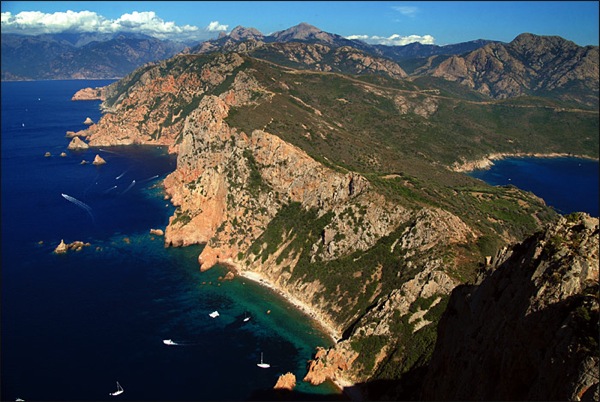
One thing which Corsica can laud over other parts of the Mediterranean is that it is relatively unspoilt, having had less development. Nature lovers (and also those who prefer to admire the scenery from afar!) will fall in love with the magnificent mountains, abundant wildlife and the one thousand metres of coastline.
Corsicacoast


What to do?
The most popular activities in Corsica are centred around the beaches - such as swimming, snorkeling, wind-surfing and scuba diving. Not to mention basking in the sun on the sand! However there’s more to Corsica than just intoxicating yourself with the sun and surf -- there are also some fantastic walks on the island. There are some stunning routes - both on the coast and in the mountains. There is something for everyone, from easy strolls through beautiful scenery to much more intense and challenging hikes. (The ‘GR20’, which winds its way from the southern part of the island, up to its north-western corner, takes most people about 2 weeks to complete!) Corsica values the land and environment and has set up National Parks to protect its natural treasures. The Natural Regional Park of Corsica was primarily created for the protection of rare animal habitats, but it also just plain stunning. The Scandola Nature Reserve is incredibly beautiful, and it is a bit of an adventure to get there, as the only route into the reserve is by boat -- the effort is generously rewarded by the sights which greet you.

Corsebeach

The Island is also popular with those with a penchant for History, as Corsica was the birthplace of Napoleon. Napoleon's birthplace in Ajaccio, a large and simple residence, is now a museum devoted to the Bonaparte family in Corsica. The museum evokes the life on Corsica in the 18th century, and introduces the Bonaparte family through a number of exhibits through the rooms of the house. Corsica’s history is much richer than Napoleon, however. You can also visit the ruined battlements of Castello, and learn of medieval adultery, family feuds, revenge killings, betrayal and treachery. There are also a number of interesting museums, displaying artifacts and traditional Corsican tools, clothes and other items. The oldest human skeleton ever found on Corsica (called the ‘Dame de Bonifacio) is on display in a museum near Bonifacio - the skeleton is thought to be an ancient 8,500 years old!

When to visit?

Corsica is typically Mediterranean with its hot, dry summers and mild winters. Up in the mountains it can get a little cool - so keep this in mind if you plan to do a bit of hiking through the mountains. Also, unless you are spending most of your time at the beach,the heat of the summer days can be a little oppressive if you aren’t used to hot weather. The wet season comes around during the winter months. So probably the most pleasant times of year are the Spring and Autumn.
Corsehill

Where to stay?
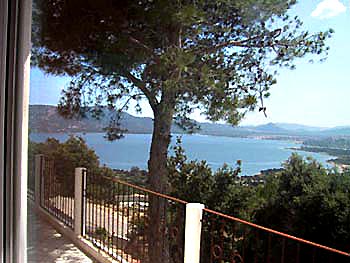
We have several beautiful villas available in Corsica. http://www.southfrancevillas.com/holiday-villas-in-corsica  One of these is the CR001A Marina di Fiori, located in Porto-Vecchio with stunning views of the Porto-Vecchio gulf. Porto Vecchio is a very popular town in Corsica - and with good reason. The beaches here are among the best on the island and there are so many flawlessly beautiful beaches and coves in the vicinity that you could spend each day of your holiday exploring a different beach. The beaches are mostly child friendly, with their shallow, warm water -- although only the most popular beaches have lifeguards. A villa in Porto Vecchio also makes a great base to explore other parts of Corsica, such as the nearby mountains and prehistoric sites inland from the town including those at Tappa and Sotta.
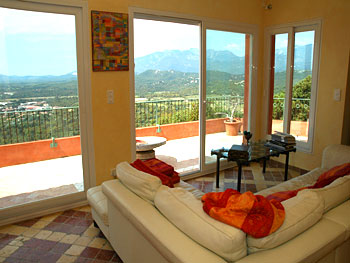
Corsevillalivingrm

The Villa itself is very comfortable, with fantastic views and filled with sunlight. With five bedrooms, a fully equipped kitchen (plus two kitchenettes), living and dining room and a private pool, this spacious villa is perfect for a large family or two families vacationing together -- with plenty of space for everybody! There is also a two-car garage, which is very convenient -- hiring a car whilst in Corsica is a very good idea, as public transport can be patchy and taxis are quite expensive.
Corsicavilla

If you have any questions or would like to discuss your Corsican holiday in more detail, please don’t hesitate to contact us! We would be very happy to help.

Contributions by Katarina Byrne